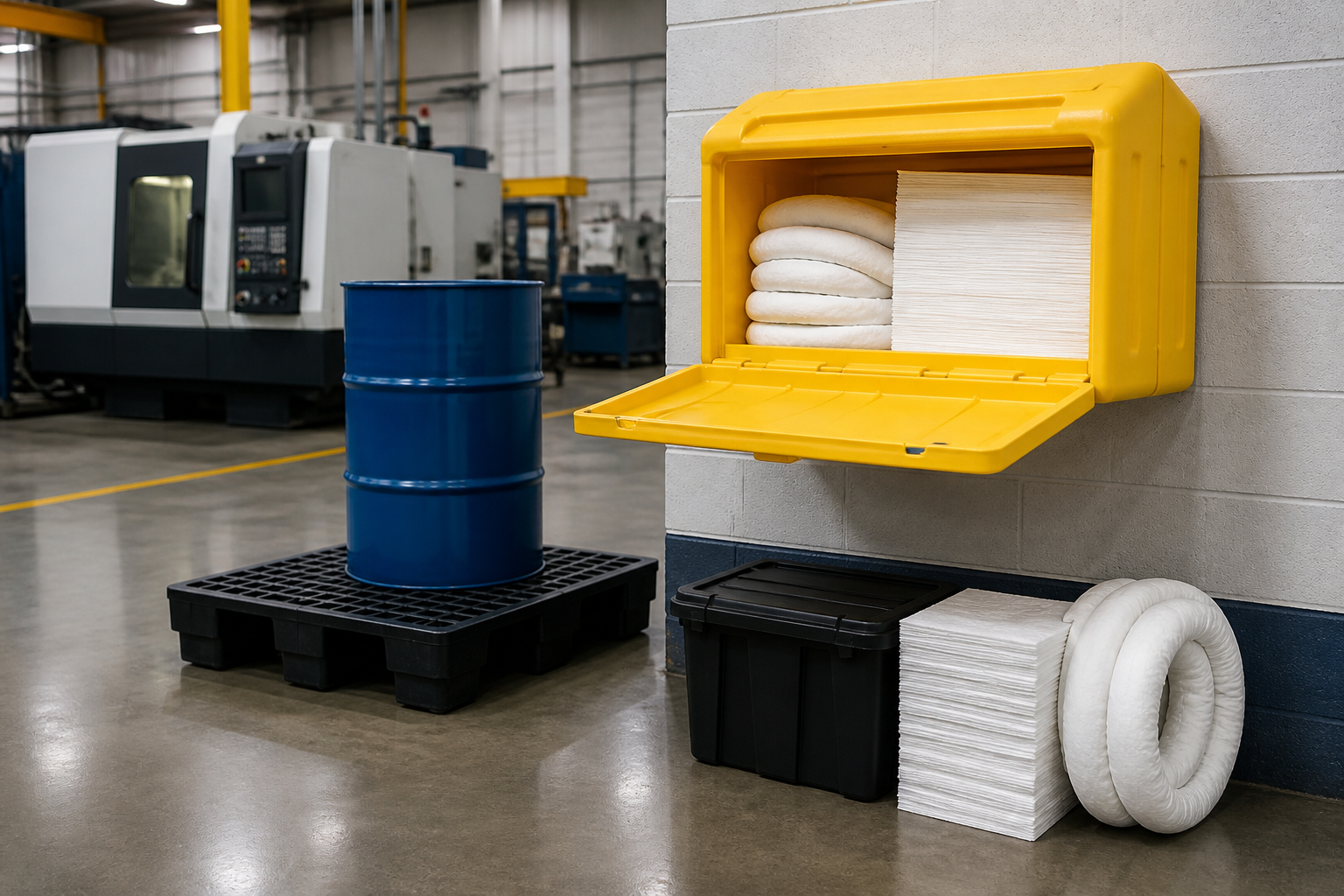
Warehouse Spill Kit Checklist: What Every Facility Should Stock
Introduction
A warehouse spill kit is a pre-assembled emergency response package that gives your team everything needed to contain and clean up a liquid spill in the minutes that matter most. Unlike a collection of loose absorbents, a proper kit arrives with a balanced assortment of pads, socks, personal protective equipment, disposal supplies, and step-by-step instructions, all stored in one highly visible container.
This checklist is written for warehouse managers, maintenance leads, and EHS coordinators who want to stock the right kit, place it where it is actually needed, and keep it ready for a real incident. It is based on the verified specifications of SYVEA Industrial spill kits, which are available in oil-only, universal, and chemical configurations.
Why a Warehouse Needs a Spill Kit
Warehouses handle liquids in daily operations: forklift batteries, fuel for equipment, hydraulic fluid, coolant, cleaning chemicals, and drummed goods waiting for dispatch. A single leaking drum or a burst hose can spread hundreds of liters across a concrete floor in minutes, creating a slip hazard, stopping traffic, and delaying shipments.
Beyond the operational cost, many facilities are required to maintain spill response supplies under environmental and workplace safety regulations. Environmental agencies expect facilities that store oil or chemicals above threshold quantities to keep response materials on hand and to have personnel who know how to use them. A stocked, accessible spill kit is the practical answer to both the compliance requirement and the everyday operating risk.
The Core Spill Kit Checklist: 10 Items to Verify
Use this checklist when you review an existing kit, or as the specification when you order a new one. Each item maps to a real role in the containment-and-cleanup sequence.
1. Absorbent Pads
Pads are the workhorse of any kit. They soak up the bulk liquid on the floor and are laid down first to stop a spill from spreading. SYVEA Industrial kits include hydrophobic oil-only pads for hydrocarbon spills, grey universal pads for oil, water, and coolant, and yellow hazmat pads for aggressive chemicals. The configuration you need depends on the liquids your warehouse actually handles. For pad types and specs, see the oil absorbent pads product page.
2. Absorbent Socks
Socks are the containment line. They are laid around the edge of a spill, around leaking drums, or along the perimeter of a machine bay to dike the liquid in place while pads do the absorption. A flexible absorbent sock can be shaped to follow any perimeter, which makes it the fastest way to stop a spreading spill.
3. Absorbent Pillows
Pillows handle the high-volume or hard-to-reach jobs: pooling liquid under equipment, in sumps, or between stored pallets. Larger kits include pillows as standard, and they are worth adding wherever a spill could collect below floor level.
4. Nitrile Gloves
Every kit includes nitrile gloves so staff can handle saturated absorbents without skin contact. For chemical kits, chemical-resistant PPE is included and specified on the label.
5. Safety Goggles
Goggles protect eyes during cleanup, especially when the spilled liquid could splash when absorbents are lifted or wrung. They are a low-cost item that should never be missing from a kit.
6. Disposal Bags with Ties
Saturated absorbents must be contained and removed without re-spilling. Disposal bags with ties let the team seal used materials on the spot, keep the work area clean, and prepare the waste for proper handling.
7. Step-by-Step Instructions
Instructions turn a kit into a procedure. Each SYVEA Industrial kit includes a response instruction sheet so that even a staff member who has never practiced a cleanup can follow the correct order: contain, absorb, collect, dispose. In an emergency, nobody should have to remember the sequence from memory.
8. High-Visibility Container
The kit container matters as much as its contents. SYVEA Industrial spill kits come in high-visibility yellow and red containers with spill kit labeling, so the kit is easy to find and hard to mistake for ordinary storage. If your kit lives in a plain box, upgrade the container first.
9. Kit Register and Location Map
Document where every kit lives and what is in it. A one-page register with kit locations, contents, and restock dates helps audits, training, and reordering. Post a small spill-response map next to the main exits.
10. Restock Schedule
A used kit is not a kit. Record which items were consumed after every incident and set a monthly inspection date to replace used or expired items before they are needed.
How Big Should Your Spill Kit Be?
The right kit size is driven by your worst-case spill scenario, not by the typical small leak. Select a kit whose absorption capacity exceeds the largest single spill volume your facility could realistically produce, for example the contents of your largest drum, tote, or machine reservoir.
SYVEA Industrial spill kits are available in 20L, 50L, 120L, 240L, 360L, and 660L sizes, with absorption capacities from 20L to 420L per kit. Compact 20L kits suit vehicles and mobile equipment, while 240L and larger station kits belong in high-risk areas such as drum storage, loading docks, and battery charging bays.
Where to Place Spill Kits in a Warehouse
A kit is only useful if it is within reach when a spill starts. Walk your facility and place kits at these locations:
- Loading docks and fuel stations, where deliveries and transfers happen most
- Drum and tote storage areas, the most common source of leaks
- Forklift and vehicle maintenance bays, where hydraulic fluid and coolant are handled
- Battery charging areas, for electrolyte spills
- Chemical storage rooms, with a chemical-configuration kit kept outside the room door
For large facilities, keep one main response station per zone and mount a compact kit on forklifts or service carts so response time stays under a minute.
Oil-Only vs Universal vs Chemical Kits
The liquids you store decide the configuration. Oil-only kits use white hydrophobic absorbents for hydrocarbons and fuels, and they float on water, which makes them the right choice for facilities handling primarily petroleum products. Universal kits use grey absorbents for oil, water, and coolant in mixed-liquid environments. Chemical kits use yellow hazmat absorbents with chemical-resistant PPE for acids, bases, and solvents.
If your facility handles more than one liquid class, a combination of configurations, or a universal kit backed by a chemical kit in the lab area, is a common and practical setup. For a detailed comparison of pad types, see our guide on choosing between oil, universal, and chemical absorbent pads.
Keeping Kits Ready: Inspection and Restock
A monthly inspection takes five minutes and prevents the most common failure mode: a kit that is empty when it is finally needed. Check that the container is sealed, the labels are legible, and every checklist item is present. After any incident, restock consumed items before the kit returns to service, and record the usage in your register.
When you plan quantities for the absorbent items in your kit, our guide on calculating how many oil absorbent pads you need gives a practical method for matching stock levels to your spill history and order cycle.
Custom Kits for Your Facility
No two warehouses have identical spill risks. SYVEA Industrial supports full customization of kit contents, container type, labeling, and branding, with MOQ applying for custom configurations. You can specify contents by liquid class, choose a PVC bag, wheeled bin, or drum container, and set the labeling language to match your site requirements. For bulk and custom needs, request a quote with your product type, quantity, application, and destination country.
Start with this checklist, match the kit to your worst-case spill, place it where the risk actually lives, and put the monthly inspection on the calendar. A warehouse that is ready for a spill spends minutes on the problem, not days.
FAQ
What is included in a spill kit?
Each kit includes absorbent pads, absorbent socks, disposal bags with ties, nitrile gloves, safety goggles, and an instruction sheet. Larger kits may also include pillows, coveralls, and additional PPE.
How do I choose the right kit size?
Select based on your worst-case spill scenario volume. The kit’s absorption capacity should exceed the largest potential spill volume in your facility. SYVEA Industrial kits range from 20L to 660L with absorption capacities from 20L to 420L per kit.
Can spill kits be customized for our needs?
Yes. SYVEA Industrial supports customization of kit contents, container types, labeling, and branding. MOQ applies for custom configurations.
How often should spill kits be inspected?
Monthly inspection is a good baseline. Restock consumed items after every incident and verify that the container, labels, and PPE are intact.
Should we stock one large kit or several small ones?
Match the kit to the risk at each location. One large station kit in high-risk areas plus compact mobile kits on vehicles or carts gives faster response than a single central kit.
Ready to stock your warehouse properly? Browse SYVEA Industrial spill kits or contact sales with your product type, quantity, application, and destination country for a tailored quotation.
发表回复