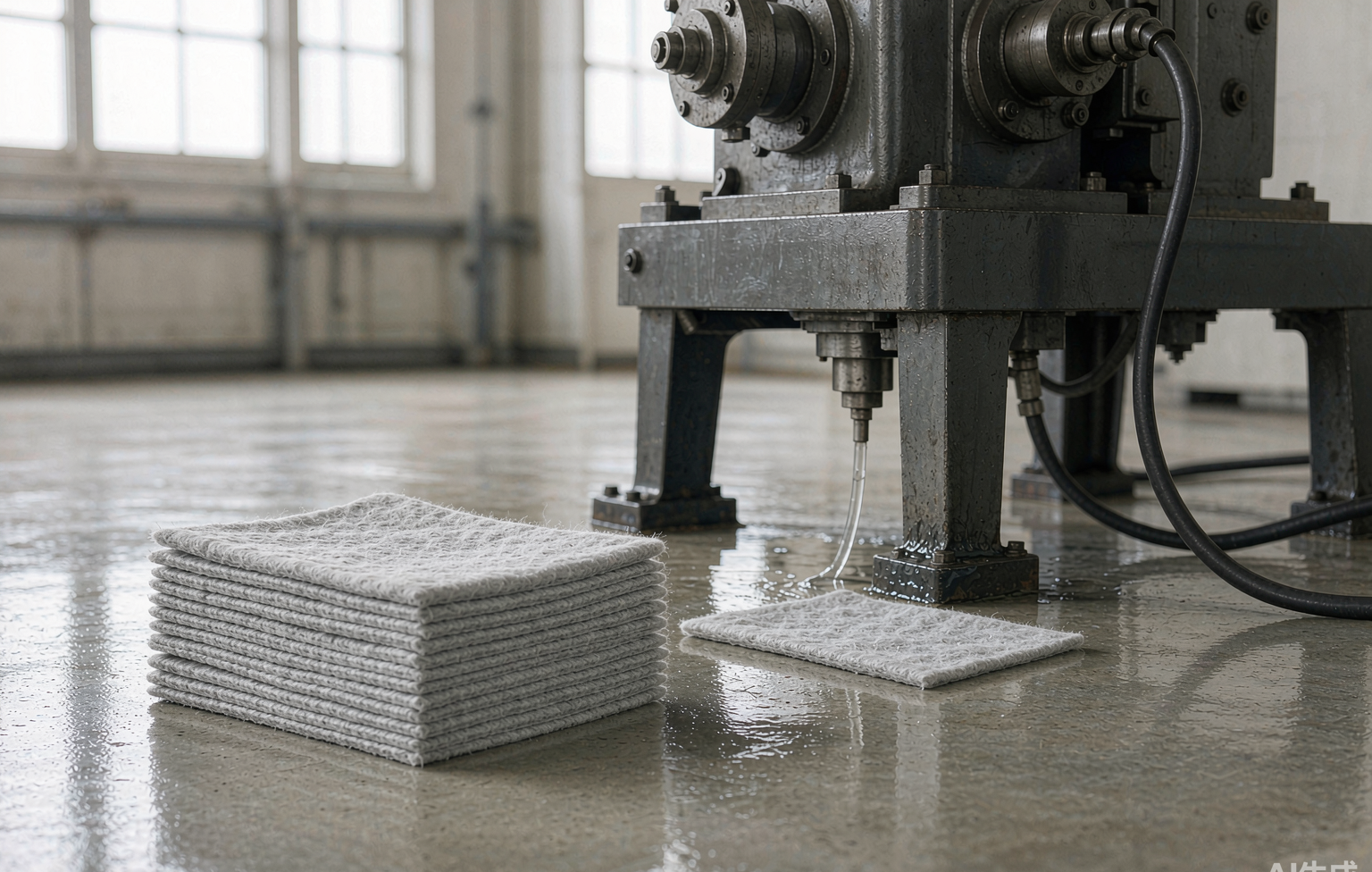
The floor that sees more than one liquid
Spend a shift walking a production area and count the liquids: coolant misting off a machining cell, hydraulic oil weeping from a power pack, washdown water pooling along the same aisle, solvent rags drying at the cleaning bench (a broad spectrum of industrial liquids including oils, water, coolants, solvents, and mild chemicals, which is how the product page puts it). A store built around a single liquid ends up stocking a different absorbent for each of them, and the first thing that fails is not the absorbent itself. It is the picking logic: whoever restocks the station grabs whichever bag is closest, and the wrong pad ends up on the spill.
That is the specific problem SYVEA Industrial universal absorbent pads are built for. They offer versatile spill control for a broad spectrum of industrial liquids including oils, water, coolants, solvents, and mild chemicals. One SKU covers the mix, so the station can be stocked once and the pick is always right.
What a universal pad is
The pads are manufactured from high-quality meltblown polypropylene, and the grey color is the specification, not a styling choice. Material and color come straight off the product page: meltblown polypropylene, grey. Absorption is rated at up to 25x own weight, which is what lets a single pad sit under a weeping fitting for a full shift before it needs swapping.
The universal formulation makes these pads the go-to choice for general maintenance, workshop cleanup, and mixed-liquid spill scenarios where a single absorbent solution is preferred. Read that sentence as a purchasing instruction. Wherever the liquids vary but none of them are aggressive, the universal pad is the one SKU that matches all of them, and stocking it removes the decision from the floor entirely.
Where that applies in practice
General maintenance and workshop cleanup are the core cases. Around machines that cut with coolant, along assembly lines where hydraulic units share floor space with washdown stations, at points where whatever drips is not known in advance: a pad specified for oils, water, coolants, solvents, and mild chemicals handles the lot. The full range sits on the universal absorbent pads product page.
Reading the specification
| Specification | Value |
|---|---|
| Material | Meltblown Polypropylene |
| Color | Grey |
| Weight options | 200 gsm, 300 gsm, 400 gsm, 500 gsm |
| Dimensions | 40cm x 50cm (standard), customizable |
| Absorption capacity | Up to 25x own weight |
| Liquids absorbed | Oil, water, coolants, solvents, mild chemicals |
| Packaging | 100 pcs/bag, 200 pcs/case (customizable) |
Every row above comes from the live product page, and the table is deliberately short. These are the seven values a buyer actually orders against.
Choosing the weight
The pads are available in lightweight, medium, and heavy grades, with bonded, perforated, or dimpled surface options, and the weight options run from 200 gsm to 500 gsm. The grade decides how the pad is used rather than whether it works. For frequent wipe-downs and thin films, choose a lighter weight; for a pad that has to sit under a drip for a full shift, specify a heavier grade instead. The surface options are part of the same order line, so the grade and the finish are settled together rather than as separate decisions.
What the dimensions decide
Pads come in 40cm x 50cm (standard), customizable. The standard sheet covers a workbench, a machine foot, or a drippy pump plinth. Because the pads come 40cm x 50cm (standard), customizable, a line with an unusual footprint does not have to be covered by overlapping standard sheets; the size can be matched at inquiry stage instead.
Where the universal pad does not reach
The liquids list ends at mild chemicals, and that word is doing real work in the specification. A facility whose liquids run past the mild end of that list is outside what this page evidences, and the honest move at inquiry stage is to say so and have the application checked rather than to order a general-purpose pad and find out on the floor. For those environments the chemical pad range exists, and the right specification starts with the liquid, not the pad.
Stating the boundary is part of the specification. It is also what keeps an RFQ short: the buyer who arrives knowing the liquid list gets a straight answer, and the supplier who knows the boundary quotes accurately.
Ordering and stock
Packaging runs 100 pcs/bag, 200 pcs/case (customizable), which maps cleanly onto how stations are actually restocked: bags to the station, cases to the store. Because one SKU covers the mixed-liquid floor, the case count is easier to forecast than a multi-SKU scheme, and consumption per station becomes a number maintenance can actually track.
For current lead times and grade availability, contact our team with the liquid list from your floor. The wider range, including the oil-only and chemical variants for the areas this article excludes, is on the products page.
FAQ
Do universal absorbent pads absorb water?
Yes. Water sits inside the approved liquids list: oil, water, coolants, solvents, mild chemicals. A pad specified for that list handles water the same way it handles oil, which is what makes it the default choice indoors.
Can one pad handle oil and coolant together?
Yes. The specification covers oils, water, coolants, solvents, and mild chemicals as a single formulation, so a mixed spill does not need two products. That mixed-liquid coverage is the core of the universal formulation.
What are the pads made of?
Meltblown polypropylene, in grey. Absorption is rated at up to 25x own weight, and the weight options span 200 gsm to 500 gsm.
Which weight should I order?
The weight options run from 200 gsm to 500 gsm, in lightweight, medium, and heavy grades with bonded, perforated, or dimpled surfaces. If the choice is not obvious from the floor, consider a mixed first order and decide from what each station actually consumes.
Do the pads come in sizes other than 40cm x 50cm?
The standard sheet is 40cm x 50cm (standard), customizable. Where a machine footprint or a production line does not match the standard sheet, the size can be specified at inquiry instead of covered with overlaps.
发表回复